


March 19, 2024
Action Alert: Speak up for Banff’s ecosystems
Dear valued AWA members, As you may have heard, plans are underway to rehabilitate Banff’s…

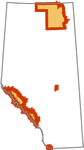
Alberta is home to five National Parks: Banff, Jasper, Waterton, Wood Buffalo and Elk Island.
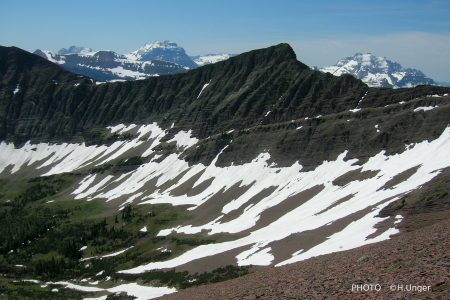
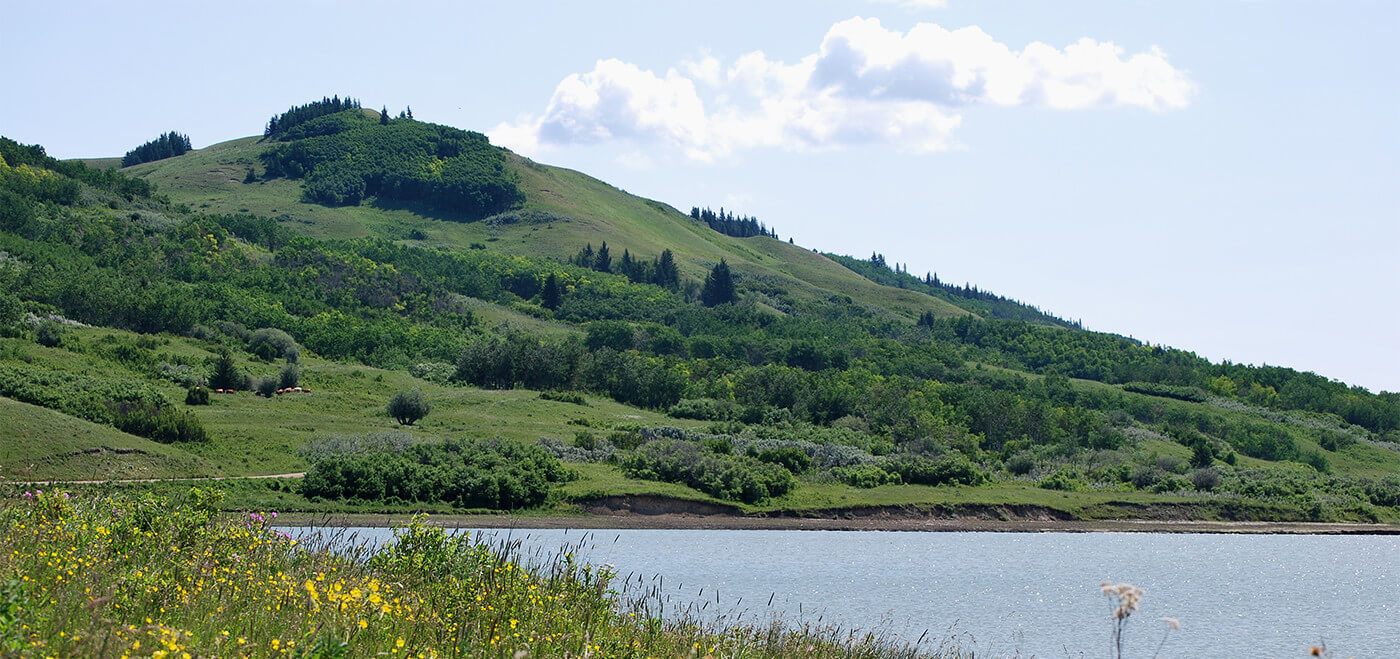
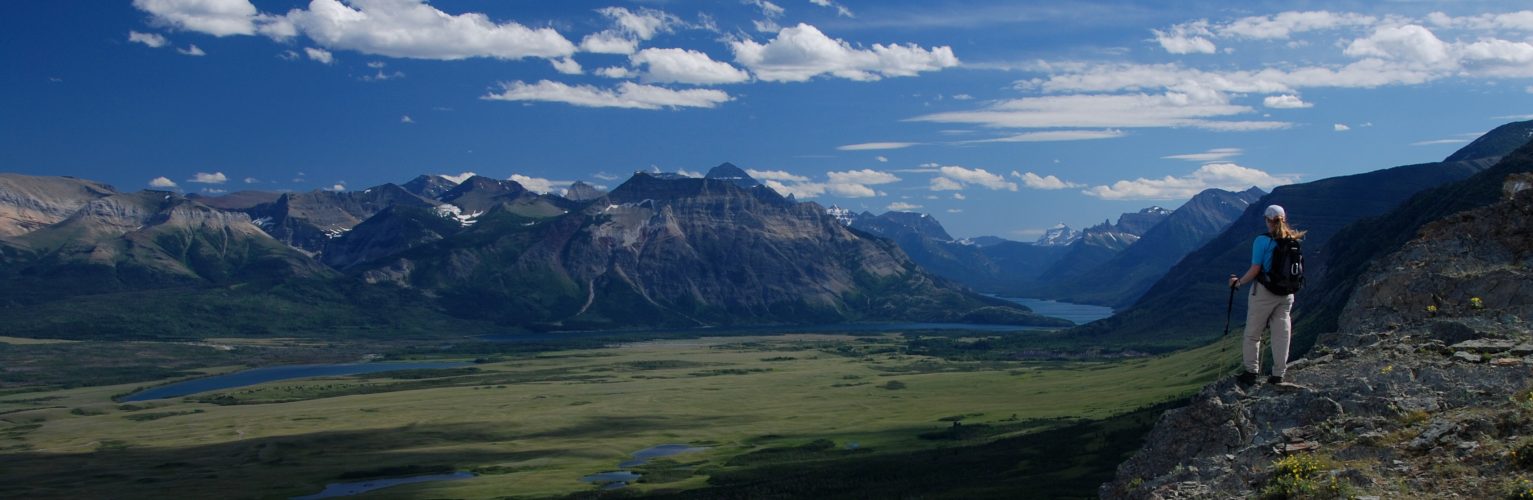
Waterton Lakes National Park ©H. Unger
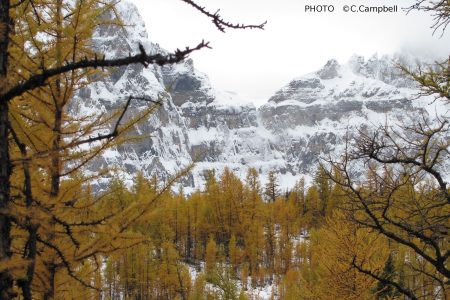
Larch Valley, Banff National Park ©C. Campbell
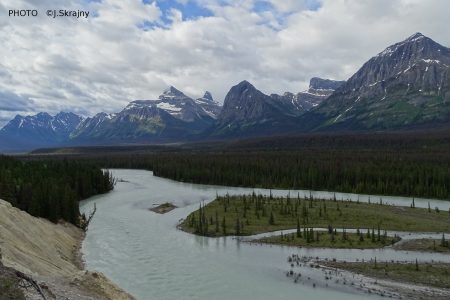
Goats & Glacier Lookout, Jasper National Park ©J. Skrajny
They include Canada’s first National Park (Banff, established in 1887), and also its largest (Wood Buffalo, at 44,807 km2). Together the five National Parks make up approximately 8.2 percent of Alberta’s land mass. National Parks are a critical component to the protected areas network in Alberta.
 |
 |
“National Parks are maintained for all the people— for the ill, that they may be restored, for the well that they may be fortified and inspired by the sunshine, the fresh air, the beauty, and all the other healing, enobling and inspiring agencies of Nature. They exist in order that every Citizen of Canada may satisfy his craving for Nature and Nature’s beauty; that he may absorb the poise and restfulness of the forests; that he may steep his soul in the brilliance of the wild flowers and the sublimity of the mountain peaks; that he may develop in himself the buoyancy, the joy and the activity he sees in the wild animals; that he may stock his mind with the raw material of intelligent optimism, great thoughts, noble ideals; that he may be made better, happier, and healthier.”
J.B. Harkin, Canada’s first Commissioner of National Parks, 1957
The National Parks are all on federal land, administered by Parks Canada. According to Parks Canada’s website,
“Parks Canada is responsible for both protecting the ecosystems of these magnificent natural areas and managing them for visitors to understand, appreciate, and enjoy in a way that doesn’t compromise their integrity.”
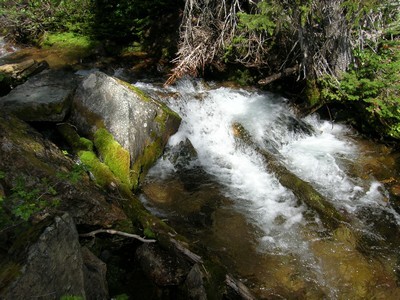
Waterton Lakes National Park (H. Unger)
Parks Canada identify two roles for National Parks:
Parks Canada’s challenge is how to balance these two important, yet potentially conflicting elements of Park management – ecosystem protection and visitor enjoyment.
Four of Alberta’s five National Parks are designated UNESCO World Heritage sites, all in the 1980s (see Features).
National Parks – From Banff, Jasper, Waterton Lakes, Elk Island to Wood Buffalo, some of Alberta’s largest and most iconic protected areas are National Parks. Under the Canada National Parks Act, National Parks are established for “the benefit, education and enjoyments” of Canadians and must be managed in a way that leaves them intact for future generations.
National Wildlife Areas –Under the Canada Wildlife Act, National Wildlife Areas are “created and managed for the purposes of wildlife conservation, research, and interpretation.” Most are relatively small with the exception of Canadian Forces Base (CFB) Suffield NWA, which is significant for its protection of native prairie.
Migratory Bird Sanctuaries – These can be established on private, provincial, territorial and federally owned land to protect and conserve migratory birds, both as populations and individuals including nests; Environment and Climate Change Canada are responsible for the protection of migratory birds and their nests. They are established under the Migratory Birds Convention Act.
The spectacular Banff National Park is one of the country’s most famous and best-loved National Parks. Established in 1887, it is Canada’s first National Park. At 6,641 km2 it protects three distinct Natural Regions – the alpine, subalpine, and the montane – each with its own distinct flora and fauna.
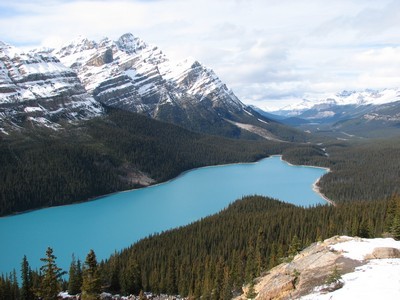
Peyto Lake, Banff National Park (N. Douglas)
In 1984, the Canadian Rocky Mountain Parks, including Banff and Jasper in Alberta, were declared a UNESCO World Heritage site.
The 10,878km2 Jasper National Park was established in 1907.
In 1984, the Canadian Rocky Mountain Parks, including Banff and Jasper in Alberta, were declared a UNESCO World Heritage site.
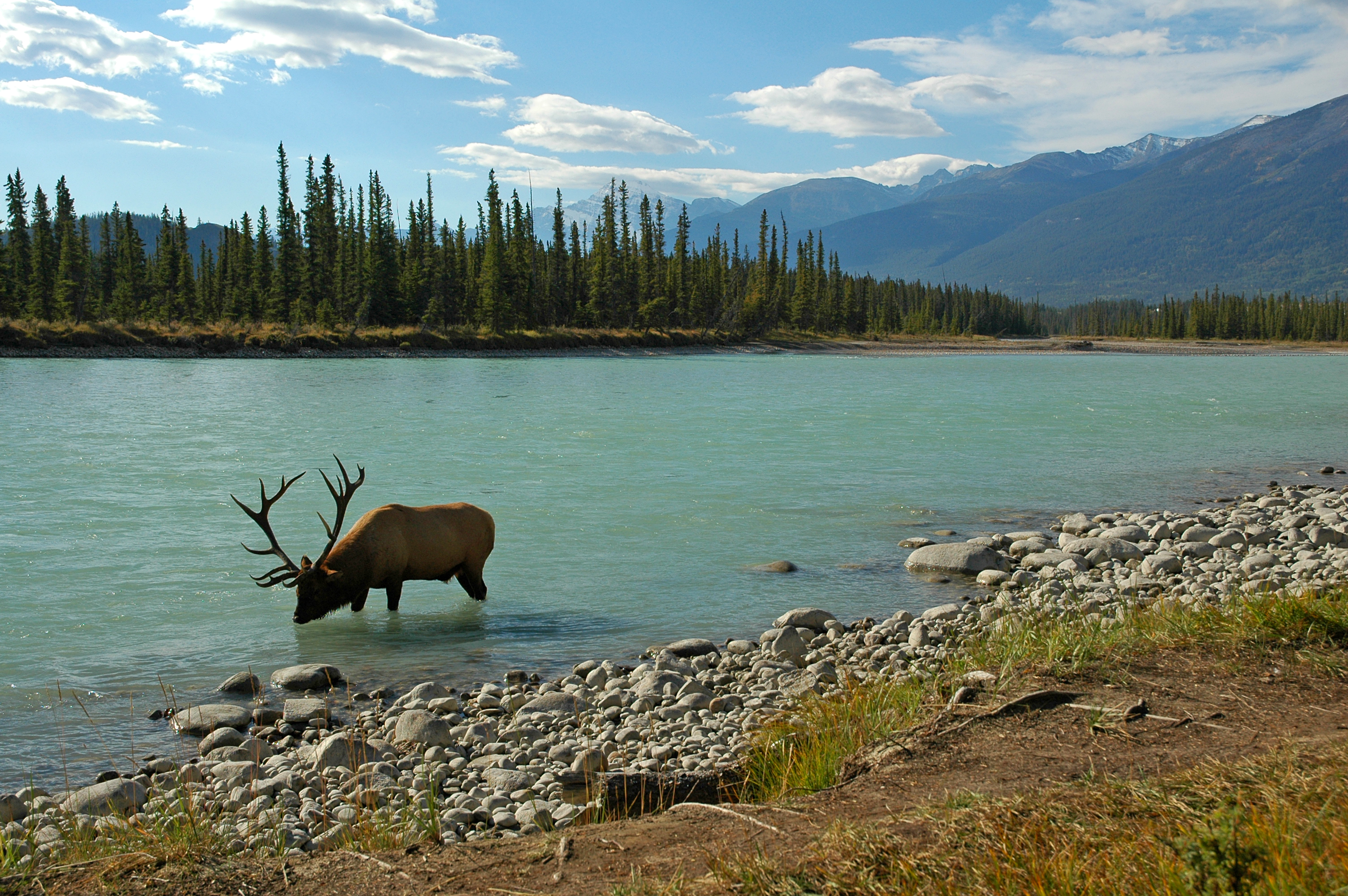
Elk in the Athabasca River, August 2007. Photo Credit: C. Wearmouth
Waterton Lakes National Park, Canada’s fourth National Park, was established in 1895. In 1932, it was joined with Glacier National Park in the U.S. to form the Waterton-Glacier International Peace Park, which was designated a UNESCO World Heritage site, 1985.
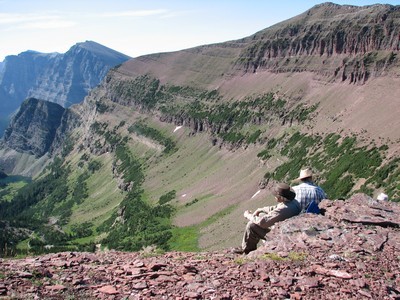
Waterton National Park (N. Douglas)
The 505 km2 National Park is popularly referred to as the place where “the Mountains Meet the Prairie.” No protected area of similar size in the Rocky Mountains has as much ecological diversity as Waterton Lakes National Park.
Wood Buffalo National Park, at 44,807 km2 is Canada’s largest National Park. The Park is shared between Alberta and the Northwest Territories: 81 percent – or 36,330 km2 – is in Alberta; 19 percent – or 1,480 km2 – is in the Northwest Territories.
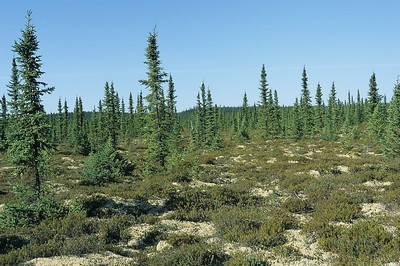
Wood Buffalo (L. Allen)
Wood Buffalo is the world’s only natural nesting site of the endangered whooping crane and supports the largest free- roaming and self-regulated bison herd in the world. Another of the park’s attractions is the world’s largest inland delta, located at the mouth of the Peace and Athabasca rivers.
Wood Buffalo National Park was designated a UNESCO World Heritage site in 1983.
The 195 km2 Elk Island National Park was established in 1906. It protects the wilderness of the aspen parkland, one of the most endangered habitats in Canada.
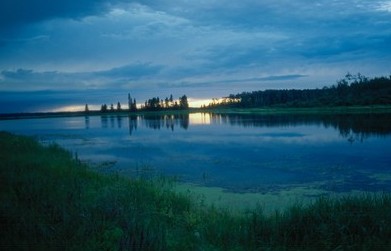
Elk Island National Park (J. Geary)
This oasis in a developed landscape is home to herds of free roaming plains bison, wood bison, moose, deer, and elk, and boasts over 250 species of birds.
Mountainous terrains and flat, forested valley bottoms characterize Banff and the greater Bow Valley, a region rich in biodiversity. As one of the few east-west passages across the Rockies, its natural connectivity is critical for the movement of iconic species like grizzlies and cougars. The same features that make this area an essential wildlife corridor make it an attractive region to live, work, and recreate, but recent research has found that existing development in the region has reduced connectivity by 85 percent and the amount of high-quality habitat by 35 percent. Ensuring the long-term health and resilience of the Bow Valley necessitates all future planning and development to maintain and/or improve ecological integrity. The threat of further development and an expanded human footprint has increased as of late, with multiple development projects on the radar of AWA and other ENGOs in the region.
Improving public transportation in the Bow Valley is necessary for inclusive and sustainable access to Banff National Park and to minimize the environmental impacts associated with current human pressures. It is also critical that these improvements not come at the cost of increased habitat loss and reduced regional ecosystem connectivity. AWA is concerned that the current proposal is insufficient to address these requirements, particularly because:
Current information available regarding our concerns suggests that this proposal does not act in the best interest of the public or the environment. Further investment into CABR is also unadvisable without key land-use plans for the Bow Valley, like a regional transportation strategy, in place.
As proposed, the railway’s potential route would traverse 150 km across a diverse and iconic Alberta landscape of significant environmental, economic, and societal value. Species at risk (SAR) listed under the Alberta Wildlife Act inhabit the prairie, foothill, and mountain ecosystems the railway would cross, including the threatened grizzly bear (Figure 1A). Almost the entirety of the railway would also be located in what has been identified as a key wildlife and biodiversity zone (Figure 1B). 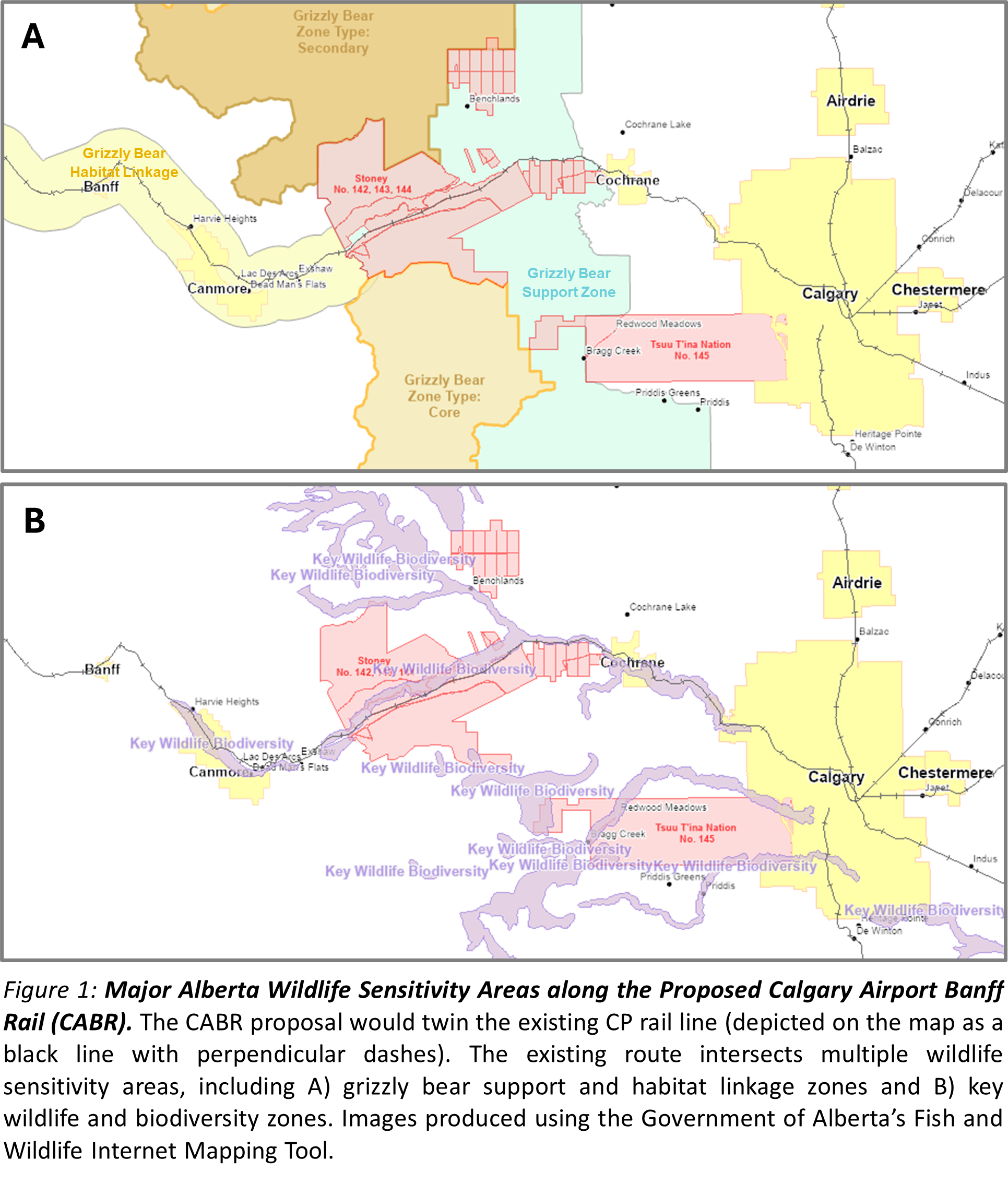
Grizzly bears are highly sensitive to human disturbance; human-bear conflicts, poaching, and accidental collisions with vehicles are the greatest threats to current populations[1]. The CABR proposal will increase human footprint in the area, add additional pressures onto the region’s grizzly bears, and reduce the likelihood of achieving the goals and objectives identified in the Alberta Grizzly Bear Recovery Plan. Numerous federally listed SAR also rely on the region, including the Banff Springs snail (endangered), common nighthawk (threatened), little brown myotis (endangered), olive-sided flycatcher (threatened), and the Westslope cutthroat trout (threatened). The most recent version of multi-SAR action plan for Banff National Park emphasizes that “the main threats to biodiversity within the park and surrounding region include … increasing development pressures in the region, and wildlife mortality related to highway and railway corridors”[2].
Alberta’s commitment to the Accord for Protection of Species at Risk and National Framework for the Conservation of Species at Risk necessitates a precautionary approach to further development and infrastructure in the highly sensitive and ecologically important Bow Valley region. Banff National Park has an international reputation and is a critical part of Alberta’s identity. The national park and its associated economic, recreational, and tourism opportunities are owed to the scenic landscapes and iconic wildlife of the region; threats to these ecological features are threats to those opportunities. The CABR risks increasing ecosystem disturbances, frequency and severity of human-wildlife conflicts, and transportation issues.
Existing major transportation infrastructure, like the Trans Canada Highway and CP rail line, are well-known to disturb wildlife on the landscape[3],[4],[5],[6]. The addition of a CABR would exacerbate their impacts, further fragmenting the landscape and reducing ecosystem connectivity. Wildlife collisions in the region are an ongoing concern in terms of human and wildlife injuries and mortalities. An additional linear disturbance like the proposed CABR will increase the distance and time wildlife will be left vulnerable when crossing and reduce the predictability of approaching trains, increasing wildlife strikes and their associated cost and time to manage and mitigate. Local effects like train strikes have broader cascading impacts on biodiversity in the province, impacting population numbers, gene flow, and the long-term species persistence of wildlife travelling through the Bow Valley.
Extensive time, funding, and resources into wildlife fencing, overpasses, and underpasses have already been allocated to reduce wildlife collisions on existing transport routes, but they offer incomplete protection. Current research has identified further strategies to mitigate injuries and mortality on the highway and railway, including removing attractants nearby the linear features, decreasing vehicle speed, improving sightlines, especially around curvature, increasing audibility of incoming trains, and more, but they are underutilized in Alberta[3],[4],[5],[6]. The proposed CABR would add to the current need for better mitigation efforts and come with increased costs and challenges.
The CABR is proposed as a climate solution through reducing emissions and vehicle traffic into Banff National Park, but currently, no compelling data has provided a basis for this. While a hydrogen train does not produce emissions while in operation, the proponents have failed to provide a comprehensive emissions reduction calculation and environmental impact assessment considering the emissions produced in sourcing, constructing, and maintaining the railway over its life cycle[7]. The project also does not address threats to existing natural climate solutions along the route; the ecosystems currently present are key wildlife and biodiversity zones, storing carbon, producing oxygen, and filtering water and air amount other benefits. It will be no small feat to complete this in-depth assessment, and appropriate time and care should be taken to weigh alternative options to ensure the strategy ultimately chosen to reduce traffic and emissions in the region will be successful[7].
A meta-analysis comparing the environmental impacts of different types of transportation found that besides bicycles, buses are the most sustainable vehicle overall, with the added utility of transporting larger numbers of passengers over greater distances[7]. The Calgary Bow Valley Mass Transit Feasibility Study published in 2018 evaluated both buses and trains to reduce road congestion, travel times, and GHG emissions, and improve safety for wildlife and overall visitor experiences[8]. The study found that the scenarios for year-round bus operations would cost less than half that of comparable train services, with capital costs in the range of $8.1 – $19.6 million; even at their maximum range, a bus system would cost 34 times less than a passenger railway[8]. Regional bus transportation could also use existing roads and infrastructure, limiting further construction in the Bow Valley, in contrast to railway options, which would expand the human footprint in the sensitive ecological area[8]. With finite funds and resources available to invest into transportation in the Alberta, it is in the public interest to develop provincial or regional transportation strategies, rather than fund a private proposal addressing one small section. The CABR would have public funding reallocated to the interests of a private company, committing the province to a 50-year mortgage, increasing taxpayer risk, and reducing capacity for improving the sustainability and functionality of public transportation in the future. The Expert Advisory Panel on Moving People Sustainably in the Banff Bow Valley report also advised that because a passenger railway cannot be operational in the near or mid-terms, a bus or shuttle system would be advantageous to pursue in the interim.
The CABR could also increase resident and tourist visitation to Banff and the surrounding regions, which are already strained at their current capacities. In the 2022 – 2023 fiscal year, the park was visited by 4.13 million people, with over 90% arriving in a personal vehicle [8],[9]. The proponent’s updated ridership numbers forecast that the CABR will serve 11.8 million riders annually by 2035 [10],[11]. While the majority of ridership will be within Calgary, they estimate 20%, or 2.36 million riders will be visitors to Banff National Park, substantially higher than the 267,000 – 748,000 boardings projected by the Feasibility Study for the entirety of the Bow Valley [8],[10],[11]. For added comparison, Canada’s busiest intercity rail route, transporting people from Montreal to Toronto, had 1.8 million passengers in 2022 [12]. The CABR’s projections indicate the proponents anticipate capturing over half of all current visitor traffic into the park on trains; the uptake seems improbable without further information, as obtaining this high level of ridership would require extensive changes in current behaviour [10],[11].
The CABR proposal suggests a train will leave from Calgary every 1-2 hours, meaning a minimum of 12 to a maximum of 24 trips a day (assuming it runs through the night)[11]. These forecasts are inconsistent with the Feasibility Study, which recommended 8 round trips per day, based on estimated ridership projections and the capabilities, costs, and capacities of a variety of available train types, including diesel multiple units (173 passengers) or locomotive-hauled trains (420 passengers) [8]. Considering the CABR hopes to be the first hydrogen-powered passenger rail in North America and that the largest hydrogen trains currently operating in 2024 have a capacity of up to 260 passengers, the proponent’s projected ridership is mismatched with their proposed schedule and the reality of visitation to Banff National Park, as over a third of total visitations to Banff National Park are concentrated in July and August alone [8],[13].
Extrapolating from their forecasts, the CABR would need to transport almost 800,000 people in two months, or around 13,000 daily passengers on the CABR during this peak time. 12 trips would transport 3,120 round-trip passengers a day, while 24 would move 6,240 people at max capacity, well under what would be necessary to meet their projections and accommodate summer visitor volumes. The larger capacity locomotives explored in the Feasibility Study would also not meet this forecast, transporting a maximum of just over 10,000 roundtrip passengers in 24 trips. Ignoring seasonal visitation numbers, even if the train ran at full capacity, 24 times a day, 365 days a year, this still only comes out to 2.28 million riders (not accounting for time and resources needed for fueling, maintenance, and unforeseen circumstances). This is a crude breakdown, but without concrete data or explanations available publicly on how the CABR calculated its ridership forecasts, these dissonant projections raise concerns over the basis and validity of the proponents’ claims.
The rapid speed at which the proponents have progressed through the CABR proposal phases since 2021 and the lack of available information, data, or justifications for their claims is a cause for concern. The proponent is reported to have completed an assessment of economic impacts, investigated the feasibility of hydrogen fueling, and explored how to reduce risks to wildlife, among other milestones, but none of this is available for public comment or independent analysis. The consultations that have been completed with the surrounding communities and the supposed support for the CABR must be understood conditionally; as evidenced in the preceding paragraphs, the proponents are proposing scenarios without a proven basis in reality. Environmental groups have not been meaningfully consulted in this matter. At best, the CABR leaves out critical information and, at worst, actively misdirects and misleads the public. The proposal disregards and distracts from the need for a precautionary, collaborative approach to improving sustainable transportation throughout Banff and the Bow Valley.
In December of 2023, the town of Banff gave first reading to the proposed Railway Lands Area Redevelopment Plan (ARP), a land-use plan that is “arranged to accommodate the potential for a future passenger train service from Calgary and incorporates intercept parking for an estimated 900 vehicles, including the existing south intercept parking lot, [and] a gondola terminus”. As a planning document, an ARP outlines land use policies and programs that provide guidance to the redevelopment of an area in need of rehabilitation, in this case, the historic Banff train station and grounds located near the town’s west entrance. These plans convey a vision on the future direction of the region and the objectives that would help attain that vision; AWA, along with other ENGOs in the region, is concerned that the vision laid out in the ARP fails to best serve the town of Banff and would threaten the ecological diversity and ecosystem connectivity within the National Park and the greater Bow Valley.
In its current state, the planning area already has 490 parking stalls on the south side of the railway tracks and 170 stalls in front of the Fenlands Recreation Centre — the addition of more intercept parking, specifically the plan to pave an additional 410 stalls north of the train tracks, would further narrow the Fenland-Indian Grounds Wildlife Corridor and result in the direct biodiversity loss of 1.7 hectares of native habitat known to be used by local wildlife. This would contradict the Recommendations for Improving Human-Wildlife Coexistence in the Bow Valley co-published by the town of Banff in 2018, which advised reducing human footprint in nearby wildlife corridors. Creating additional parking for private vehicles also undermines ongoing initiatives to reduce traffic volumes in the National Park and Banff townsite. Proponents of the ARP anticipate requiring 140 stalls in the summer and 575 in the winter for their own demand, which would reduce the intercept parking available to visitors of the town. The Transportation Impact Assessment within the ARP’s appendices reveal that these stalls are intended as parking for people using a potential gondola service to the proponent’s ski resort.
The inclusion of a gondola terminus and mention of future service in the ARP is confusing, as although cited as “aspirational,” it is frequently mentioned in the appendices that inform the ARP. It is also a project that has already been denied. In 2020, Parks Canada (PC) rejected the same proponent’s proposal to build a gondola up Mt. Norquay, asserting “there will not be further consideration” of the project. The issue of the gondola has been intensively discussed for years, with the ministry giving clear direction to the proponents and town that such a gondola would not be in conformity with PC’s duty to maintain, restore, and improve the ecological integrity of Banff National Park. Leaving planning for this project within the ARP following this decision seems in direct opposition to PC’s authority on the matter.
The need for a comprehensive regional transportation strategy in the Bow Valley has been long recognized — reducing overall traffic would decrease congestion, travel times, greenhouse gas (GHG) emissions, and the number of wildlife strikes, while improving accessibility, ecological outcomes, local livelihoods, and visitor experience in the region. The Calgary-Bow Valley Mass Transit Feasibility Study, prepared for the town of Banff in 2018, evaluated multiple mass transit options including bus and rail scenarios. The report found that the capital costs to implement a bus system were 34 times less than that of a train, with annual operating costs also less than half that of a comparable railway service. Buses would have similar ridership numbers, and would use existing infrastructure, working with instead of expanding the human footprint in the region. Parks Canada’s 2022 Expert Panel on Moving People Sustainably in the Banff Bow Valley report noted a staged approach to mass transit would be required to address current issues, identifying an expanded bus service as an adaptive, flexible, and scalable solution in the interim before other options.
This is important, because the ARP provides just four stalls for buses and no planning for a bus station, but includes planning for another aspirational project, a passenger rail service. Many of the benefits to the town claimed by the ARP are actually associated with a future passenger rail service, which itself poses significant ecological concerns to the region and is well out of the scope of this project. The Banff National Park of Canada Management Plan released in 2022 notes extensive work is already required to mitigate wildlife mortality on the existing railway, and that twinning the track and expanding associated infrastructure in the park would further “augment these challenges.” As some of the last developable land within the town’s perimeters, the ARP should prioritize planning for solutions that can be realized in the near term, like an expanded bus service, which builds on the success of existing regional mass transit services like Roam.
[1] Alberta Environment and Parks. (2020). Alberta Grizzly Bear Recovery Plan. Alberta Species at Risk Recovery Plan. https://open.alberta.ca/publications/9781460147917
[2] Parks Canada Agency. (2017). Multi-species Action Plan for Banff National Park of Canada. Species at Risk Act, Action Plan Series. https://wildlife-species.canada.ca/species-risk-registry/virtual_sara/files/plans/Ap-Bnp-v00-2017Dec-Eng.pdf
[3] Backs, J. A. J., Nychka, J. A., & St. Clair, C. C. (2022). Low audibility of trains may contribute to increased collisions with wildlife. Transportation Research Interdisciplinary Perspectives, 13, 100516. https://doi.org/10.1016/j.trip.2021.100516
[4] Ford, A. T., Dorsey, B., Lee, T. S., & Clevenger, A. P. (2022). A before-after-control-impact study of wildlife fencing along a highway in the Canadian Rocky Mountains. Frontiers in Conservation Science, 3. https://www.frontiersin.org/articles/10.3389/fcosc.2022.935420
[5] Pollock, S. Z., & St. Clair, C. C. (2020). Railway-Associated Attractants as Potential Contaminants for Wildlife. Environmental Management, 66(1), 16–29. https://doi.org/10.1007/s00267-020-01277-6
[6] St. Clair, C. C., Whittington, J., Forshner, A., Gangadharan, A., & Laskin, D. N. (2020). Railway mortality for several mammal species increases with train speed, proximity to water, and track curvature. Scientific Reports, 10(1), Article 1. https://doi.org/10.1038/s41598-020-77321-6
[7] Spreafico, C., & Russo, D. (2020). Exploiting the Scientific Literature for Performing Life Cycle Assessment about Transportation. Sustainability, 12(18), Article 18. https://doi.org/10.3390/su12187548
[8] CPCS, prepared for the Town of Banff. (2018). Calgary-Bow Valley Mass Transit Feasibility Study. https://banff.ca/DocumentCenter/View/6308/Calgary-Bow-Valley-Mass-Transit-Feasibility-Study?bidId=
[9] Parks Canada. (2023). Parks Canada Attendance 2022-23. https://open.canada.ca/data/en/dataset/57c69cfc-fc85-495b-9eef-555a08404034
[10] Friends of Calgary Airport Banff Rail. (2023). Fact Sheet. https://friendsofcabr.com/wp-content/uploads/2023/07/Friends-of-CABR-Fact-Sheet-07-31-2023.pdf
[11] Friends of Calgary Airport Banff Rail. (2022). Mass Transit Public Infrastructure for Calgary with Connection to Mountains: Phase 4 (Design). https://friendsofcabr.com/wp-content/uploads/2022/09/Calgary-Airport-Banff-Rail-Presentation-August-30-2022.pdf
[12] Statista. (2022). Via Rail’s most traveled inter-city routes in FY 2022. https://www.statista.com/statistics/555248/ridership-inter-city-route-viarail-canada/
[13] Alstom. (2023). FNM and Alstom present Italy’s first hydrogen-powered train | Alstom
[14] https://banff.ca/DocumentCenter/View/16047/Draft-Banff-Railway-Lands-ARP_FINAL_September-2023
August 2023 – At Waterton-Glacier International Peace Park, Parks Canada, the National Parks Service of the United States, and Indigenous leaders signed a new Memorandum of Understanding, renewing the longstanding transboundary relationship and committing to prioritizing the co-management of public lands between the federal agencies and Indigenous communities.
July 2023 – AWA submits a statement of concern on the 2022 IUCN Reactive Monitoring Mission (RMM) Report for Wood Buffalo National Park, stating that recent events following the RMM should demonstrate to the Joint World Heritage Centre/IUCN that the park meets the conditions for inscription on the List of World Heritage in Danger.
June 2023 – The Joint World Heritage Centre and the International Union for the Conservation of Nature (IUCN) release their report summarizing the state of Wood Buffalo National Park based on their Reactive Monitoring Mission. They conclude that “most threats to the Outstanding Universal Value of the property as identified by the 2016 remain valid today” and recommend 17 actions to halt and reverse these negative trends and protect the ecological values of the park as well as the Peace River, Athabasca River, and the Peace-Athabasca Delta.
Despite the dire assessment, Wood Buffalo National Park was not recommended for inclusion on the List of World Heritage Sites in Danger.
March 2023 – The Canadian government formally announces their commitment to recover and repopulate woodland caribou herds in Jasper National Park through a conservation breeding program. The breeding program would aim to introduce new animals into the herds as soon as 2025.
February 2023 – AWA provides comments on the Expert Advisory Panel on Moving People Sustainably in the Banff Bow Valley report, noting that despite ecological integrity being the legislated first priority of Banff National Park, it is not a theme that underpins the suggested strategies. The suggestions to develop gondolas, mobility hubs, and trains without analysis of whether new developments such as these will harm ecological integrity reflects that the panel was not well-balanced with experts who could speak to local ecological constraints. AWA supports the creation of a singular system for transportation, booking, and associated user and visitor experiences, in addition to using pricing tools to incentivize the use of mass transportation.
January 2023 – Jasper National Park buys out Tonquin Valley leases to help caribou survive.
December 2022 – Parks Canada released the final report from the Expert Advisory Panel on Moving People Sustainably in the Banff Bow Valley. The report outlines eight strategies to reduce traffic congestion and move people sustainably in Banff.
September 2022 – AWA provides comments on Parks Canada’s proposed conservation breeding program for caribou in Jasper National Park, strongly supporting the overall goal to re-populate the Jasper-Banff Local Population Unit of Tonquin, Maligne, Brazeau and Banff ranges to reach a total population of 300-400 caribou.
August 2022 – AWA co-signed a joint letter submitted by CPAWS Northern Alberta on behalf of environmental and Indigenous organizations across Canada, to the IUCN/UNESCO World Heritage Centre regarding their Reactive Monitoring Mission to assess the status of Wood Buffalo National Park.
A presentation was also provided by AWA to the Reactive Monitoring Mission.
July 2022 – AWA provides comments on the Sunshine Village Ski Area Draft Long-Range Plan and Detailed Impact Assessment, stating that as Sunshine Village is located in Banff National Park, they must prioritize ecological integrity in all management decisions. AWA requests a vegetation inventory for the area, and better protections for species-at-risk such as westslope cutthroat trout, bull trout, whitebark pine, and grizzly bears.
The Government of Alberta announces it will not support the Calgary Airport-Banff Passenger Rail Proposal due to the financial risks associated with the project. Liricon Capital Inc., the proponent of this project and owner of the Norquay Ski Resort, hopes to complete and have the project operating by 2025. They claim the train, potentially powered by hydrogen, could reduce greenhouse gas emissions by taking vehicles off the road. AWA and other conservation organizations have many questions about this ambitious goal, and whether a train is the best way to achieve it. AWA is also concerned about how a train could negatively affect wildlife and habitat connectivity in the already stressed Bow Valley.
May 2022 – Jasper National Park releases their Proposal for consultation: conservation breeding strategy to rebuild small caribou herds in Jasper National Park.
Parks Canada successfully reintroduce a small population of at-risk Westslope cutthroat trout (WSCT) into Hidden Lake in Banff National Park
October 2021 – Jasper National Park extends backcountry access closures for the entire snow season in Jasper’s Tonquin and Brazeau caribou ranges, where caribou are on the brink of extirpation.
August 2021 – Parks Canada seeks public input on the proposed closure of a stretch of the Bow Valley Parkway in Banff National Park from spring to fall 2022. AWA supports a closure to motorized access 7 days a week during the spring and fall months, as it helps maintain the integrity of wildlife habitat and sends a needed message about reducing carbon emissions in Banff National Park.
July 2021 – AWA provides comments on the National Park Draft Management Plans for Banff, Jasper, and Waterton National Park.
May 2021 – Following an expert scientific review, Parks Canada states there is strong scientific support for using conservation breeding as a way to increase caribou populations in Jasper National Park. They also announce Jasper will review caribou habitat winter access for 2021-22 to ensure Parks Canada’s efforts are focused “on what is most effective”. AWA and allies continue to advocate for a precautionary approach; conservation breeding must be accompanied by stronger protections for current populations and their habitat.
January 2021 – An update on the Banff bison herd is released; the herd has grown to 50 strong, with only two calf causalities since their introduction over two years ago. No supplementation of food has been necessary and no movements outside of the reintroduction zone have been observed.
Less than 60 caribou are left in Jasper National Park. The Alpine Club of Canada (ACC), Canadian Parks and Wilderness Society (CPAWS) Northern Alberta Chapter, David Suzuki Foundation, and Alberta Wilderness Association issue a statement requesting Parks Canada to close Tonquin backcountry to human access all snow season (instead of opening it mid-February for recreation and lodging operation) and to re-assess and reduce impacts to caribou of Tonquin summer-fall backcountry access.
In April, AWA outlines our concerns to the provincial government about its March 31 decision to suspend most environmental compliance reporting requirements of the energy industry, even as data gathering requirements remained. We join First Nations and other ENGOs in raising concerns when Alberta went on to suspend most environmental monitoring requirements in late April and early May at a time when other economic activities were re–opening with pandemic safety measures in place.
On February 1, the Government of Canada develops and submits a 142-point Action Plan to improve Indigenous governance-sharing and to address threats to the world heritage values of Wood Buffalo National Park, as raised by UNESCO in mid-2017.
On July 12, in response to a Mikisew Cree First Nation petition, a UNESCO monitoring team concludes that cumulative threats to the Peace-Athabasca Delta in Wood Buffalo National Park are not being adequately managed. These include threats from hydroelectric dams on the Peace River, climate change, and oil sands developments along the Athabasca River. They give Canada until February 2018 to develop a plan to address these threats, and until December 2018 to make progress on the plan, or risk the site being classified as a “UN World Heritage in Danger.”
In March, Parks Canada releases its plan for the Icefields Trail (North), a proposed cycling trail 20-30m parallel to the Icefields Parkway. A total of $87 million was earmarked in the federal budget and Parks Canada’s budget for the project. AWA and other environmental groups continue to oppose the project as proposed. Meanwhile, caribou populations in Jasper continue to decline.
In early February, a plains bison herd of 16 individuals is reintroduced to a “soft-release” pasture in Panther Valley in Banff National Park. The herd is expected to stay for 16 months and in the summer of 2018 released into a 1,200km2 area on the eastern edge of the park.
In January, the Minister’s Round Table is held across Canada. It is a consultation required every 2 years by the Parks Canada Agency Act. This year, on the 150th anniversary of Canada, Parks Canada chooses to invite all Canadians to weigh in through a forum called Let’s Talk Parks Canada.
In December, Lake Louise Ski Resort pleads not guilty to three charges laid for killing endangered Whitebark Pine on the ski resort in summer 2014.
In September, UNESCO goes on a reactive mission to Wood Buffalo National Park, to assess the state of conservation and threats to its Outstanding Universal Value (OUV). The mission will assess three major threats: current effects of Peace River flow due to W.A.C. Bennett Dam and Peace Canyon Dam; the cumulative effects of the Site C dam to the Peace-Athabasca Delta; impacts of planned and existing oil sands operations. The report will be released July 2017.
Environment Minister Catherine McKenna announces that Canada’s mountain parks will remain publicly owned, reversing a 2012 decision to invite private-sector proposals to take over operations. According to a Calgary Herald article, “the three hot springs in the mountain parks attract over 800,000 visitors annually and generate enough revenue for Parks Canada to break even off their operation.”
In July, Canadian Parks and Wilderness Society (CPAWS) releases their annual Parks Report, which is critical of the Agency and calls for three commitments:
The report finds conservation funding has shrunk 31% since 2012, while visitor experience program has grown by 9% even amidst an economic downturn. Conservation accounts for just 13% of the overall budget, less than half spent on visitor experience.
In June, AWA speaks out against the $66 million dollar bike trail in Jasper National Park. Conservation groups await an official announcement from Parks Canada, but more details emerge: the trail will eventually reach Lake Louise, it will utilize portions of the ‘old road’ (some of which is naturally restoring and will need to be re-paved) though the route hasn’t been decided, and the trail will be open in both summer and winter.
In May, numerous environmental groups write to the Minister of Environment and Climate Change, Catherine McKenna, requesting information about the proposed $66 million dollar trail in Jasper National Park. The NDP Parks Critic, Wayne Stetski, questions the Minister in the House of Commons.
In April, another female wolf is slated to be euthanized in Banff National Park after becoming food conditioned and exhibiting aggressive behaviour in the Two Jack campsite. Including cubs killed by trains and food-conditioned wolves killed by Parks Canada, there are now 7 wolves killed from the Banff wolf pack this year.
The Banff National Park fire team sends an update to stakeholders informing about Fall 2016 prescribed burns. There are six projects planned for Moose Meadows, Dormer Valley, Panther Valley, Harry’s Hill, Baker Creek, and Alexandra River Valley.
In February, the Honorable Justice James Russell denies the July 2015 case for a judicial review in CPAWS v Maligne Tours.
FIS (Fédération Internationale de Ski, the governing body of the 2015 proposed NORAM cross-country ski competition) confirms that the 2015 event never took place, citing inadequacies in the course.
In December, Brewster buys Maligne Tours Ltd. – Viad (Brewster parent company) website touts benefits of this purchase to investors and shareholders.
Parks Canada announces free admission to everyone in 2017 (to celebrate Canada’s 150th birthday) with free admission to children continuing thereafter. Concerns about capacity in more popular parks (such as Banff and Jasper) and whether infrastructure will be able to cope with added numbers.
In November, a mandate letter to newly-elected federal Minister of Environment includes directive to investigate and address the increasing commercialization of National Parks.
In September, “Tour de Alberta” bicycle race is held with one leg running through Jasper, despite snow on the ground, local opposition, and the fact it is in the middle of elk rutting season.
In August, ENGOs CPAWS, Y2Y, Jasper Environmental Association, Fraser Headwaters Alliance and Bow Valley Naturalists and AWA jointly write a letter to Parks Canada regarding the Lake Louise Ski Area expansion, stating “we are aware that 1,100 of these comments opposed the proposal (which means over 90% of the feedback was negative).”
In July, despite a three-week public consultation period registering over 1,200 comments, Site Guidelines for the Lake Louise Ski Area expansion are approved with no changes.
CPAWS and Jasper Environmental Association take Parks Canada to court in Canadian Parks and Wilderness Society v Maligne Tours for their July 2014 decision to approve 12 of the 13 components of the Maligne Lake proposal, arguing that the decision contravenes the 2010 Jasper National Park Management Plan.
Science and Resource Conservation Manager at Jasper National Park is suddenly fired with no warning and no reason given. In response, the Tonquin Caribou Risk Assessment Final Report is publically released, warning against implications of expanding Marmot Basin ski area developments into the Whistlers Creek drainage and other areas used as habitat by the threatened Tonquin woodland caribou herd. The report dates to March 2014 but was not initially made public.
In June, Parks Canada releases draft Site Guidelines for the Development and Use of the Lake Louise Ski Area in Banff National Park. AWA expresses major concerns, including expanded year-round capacity and misleading assertions regarding environmental benefits; failure of the draft Strategic Environmental Assessment (SEA) to properly address habitat impact in the proposed development area; and impacts to water due to snowmaking and increased demand for potable water. The draft site guidelines are also strongly opposed by other parties including ENGOs and a group of 11 former officials and scientists from Parks Canada.
“Gran Fondo” bicycle race initiated in Jasper National Park (a 2014 Gran Fondo in Banff had to be rerouted due to bears in the region), including a triathlon component. Organizers subsequently decide not to hold triathlon component in future years because of concerns regarding water temperature (lake is still partially frozen). Banff race does not make much money or bring in much tourism, and local small businesses are generally opposed.
In March, $6.4 million is allocated to a project to re-introduce “30 to 50” plains bison to a backcountry area of Banff National Park, across the border from the Panther Corners. The plan involves keeping them in a 425-square kilometer fenced off area, raising concerns about the appropriateness of fencing off areas of a national park.
In October, Calgary Zoo withdraws from partnership with Parks Canada to raise and release caribou in the parks, citing lack of money from Parks Canada.
In July, Parks Canada rejects the Maligne Tours Ltd. proposal to build a 66-room luxury hotel, but approves the remaining 12 components of the proposal, including a conceptual approval for tent cabins.
In May, Glacier Discovery Walk opens. IUCN draft report indicates that the walk and presence of all-season skiing are major threats to the UNESCO site designation for the Canadian Rocky Mountain Parks.
In January, a Basic Impact Analysis (BIA) is conducted for NORAM cross-country ski competition near Lake Louise in Banff National Park. The proposed project is a test race for a 2016 World Cup event. AWA will subsequently express its opposition to the race, supporting a letter sent by Bow Valley Naturalists to Parks Canada. A reply confirms no terrain alterations will occur should NORAM continue with the proposal, and that the event will comply with all stipulations in the BIA.
JEA receives response to their Access to Information and Privacy (ATIP) request regarding Glacier Discovery Walk. Materials received indicate that no attention was paid to public participation, and that even those opposed to the plan within Parks Canada had no available recourse to put a halt to the project.
In October, Sunshine village re-submits (with minor alterations and environmental assessment including incorrect references) a 1990s-era proposal for a day lodge development at Goat’s Eye, near the midway point of the ski area gondola, despite the fact that the nearly-identical proposal had already been rejected the first time. ENGO community including AWA registers objection.
In fall, Maligne Tours Ltd. submits a Concept Proposal for redevelopment at Maligne Lake in Jasper National Park, proposing a luxury hotel, tent cabins, and expanded retail, concession and tourism operations. This is in spite of the 2010 Jasper National Park Management Plan, which states that “no new land will be released for overnight commercial accommodation outside the community,” and despite the development site being adjacent to a zoned Environmentally Sensitive Site, in the middle of the range for the threatened Maligne woodland caribou herd. AWA strongly opposes the proposal, noting in a letter that at one consultation session, “Ninety minutes of questions and comments didn’t produce one comment in favour of the project – other than the architect who would be designing the accommodations.”
In May, the Long Range Plan for the Mount Norquay Ski Area is approved, allowing expanded summer and winter use, including the installation of via ferrata, and the widening of ski runs. This allows the ski area to break a 1996 promise not to expand summer operations in return for expanding ski facilities at that time. The plan is intended to be contingent on the inclusion expanded transit options; however this never comes to pass. AWA had also registered objection to the plan with Parks Canada on the grounds that the ski resort sits next to a wildlife corridor for grizzly bears and contains sensitive vegetation.
In April, Parks Canada implements a Restricted Activity Order prohibiting actions such as hang gliding and paragliding in Banff National Park.
In May, swinging federal budget cuts, 138 Parks Canada employees in Banff, Jasper, Yoho and Waterton Lakes national parks learn that their jobs are either “surplus” (positions that will be eliminated) or “affected”. In addition, 25 employees at the Parks Canada regional office in Calgary are also told they will lose their jobs.
In February, despite enormous public opposition, the proposed “Glacier Discovery Walk” is approved by Parks Canada. More than 180,000 people sign a petition against the proposed development, but to no avail.
In December, after a long drawn-out stakeholder process, Parks Canada agrees to bring in new travel restrictions on Banff National Park’s Bow Valley Parkway. The traffic ban on the 17-kilometre stretch of highway will begin in 2013 and will apply from 8:00 p.m. to 8:00 a.m. between March 1 and June 25 each year. AWA congratulates Parks Canada for putting the interests of wildlife first on this section of highway.
Brewster proposes to build a “Glacier Discovery Walk”, a huge metal, glass and concrete structure, in Jasper National Park. Local residents and environmental organizations oppose this “crass commercialization” of the park.
In July, the final versions of the management plans are passed, and despite considerable public comment, there are only minimal changes to the original drafts.
In November, draft management plans released for Banff, Jasper and Waterton, and made available for public comment. AWA and other conservation organizations express considerable apprehension at the proposed change in direction for the management of the parks. Whereas the legislated first priority for park management is ecological integrity, this draft plans place far more emphasis than ever before on maximizing the “visitor experience.”
In August, Jasper National Park State of the Park report released.
Banff Management Plan amended to include Human Use Management Strategy.
Canada National Parks Act states “maintenance or restoration of ecological integrity, through the protection of natural resources and natural processes, shall be the first priority of the Minister when considering all aspects of the management of parks.”
In May, Management Plans produced for Jasper and Waterton National Parks. State of the Park reports released for Banff and Waterton.
Eleven years after the implementation of the Elk Island trumpeter swan reintroduction program, the first pair of reintroduced trumpeters successfully raise four cygnets, becoming the first breeding pair in the Park in over a century.
Management Plan approved for Banff National Park.
The Banff- Bow Valley Task Force produces its report, Banff-Bow Valley at the Crossroads. The report warns of the serious ecological threat posed by ever increasing visitation:
Town of Banff incorporated as an Alberta municipality, though still subject to the National Parks Act and its regulations.
Management plans produced for the first time for Banff and Jasper National Parks.
The Canadian Wildlife Service, Parks Canada Agency, and the Friends of Elk Island initiate the Elk Island National Park Trumpeter Swan Reintroduction Program.
Waterton-Glacier International Peace Park is designated a UNESCO World Heritage site.
The Canadian Rocky Mountain Parks, including Banff and Jasper in Alberta, are declared a UNESCO World Heritage site.
Wood Buffalo National Park is designated a UNESCO World Heritage site.
23 wood bison from Nyarling River Area, Wood Buffalo National Park, introduced to Elk Island National Park.
J.B. Harkin, Canada’s first Commissioner of National Parks, writes:
“National Parks are maintained for all the people— for the ill, that they may be restored, for the well that they may be fortified and inspired by the sunshine, the fresh air, the beauty, and all the other healing, enobling and inspiring agencies of Nature. They exist in order that every Citizen of Canada may satisfy his craving for Nature and Nature’s beauty; that he may absorb the poise and restfulness of the forests; that he may steep his soul in the brilliance of the wild flowers and the sublimity of the mountain peaks; that he may develop in himself the buoyancy, the joy and the activity he sees in the wild animals; that he may stock his mind with the raw material of intelligent optimism, great thoughts, noble ideals; that he may be made better, happier, and healthier.”
Elk Island National Park expanded to include 60 km2 south of Highway 16, today known as the Wood Bison Area.
Beaver reintroduced to Elk Island National Park.
Waterton Lakes joins with Montana’s Glacier National Park to form the Waterton-Glacier International Peace Park, a world first.
The National Parks Act transfers the Kananaskis River watershed, parts of the Spray and Ghost River watersheds, and an angle between the Cline and Siffleur Rivers, out of Rocky Mountains Park to the province of Alberta. Rocky Mountains Park is renamed Banff National Park.
Lands along the eastern border of Jasper Park from Rock Lake through Brûlé, and south through the heads of Prairie Creek and Gregg River are similarly transferred to the province. Jasper Park is renamed Jasper National Park.
The Alberta Natural Resources Act increases the area of the Rocky Mountains Forest Reserve by transfers of land from parks, and the entire Rocky Mountains Forest Reserve is transferred to the Province of Alberta.
All areas in Jasper Park south of the Brazeau River are transferred to Rocky Mountains Park. A further 267 km2 around Mount Malloch along the Clearwater River are added to Rocky Mountains Park. A small strip of land between the Brazeau and Southesk Rivers is also added to Jasper Park. Finally, Jasper Park’s northern boundary is adjusted to follow the height of land between watersheds, and a few lines-of-sight across valleys.
The CNR main line east of Hinton is moved from the former Canadian Northern Railways line to the former Grand Trunk Pacific line. This frees up the former to be used as a road, providing easy road access to Jasper from Edmonton.
Jasper Park is increased in area to the south, to include portions of the upper North Saskatchewan River watershed, including parts of Siffleur, Cline, Cataract and Brazeau River basins, as well as the Mistaya River to Bow Summit.
The CNR eastern spur line to Pocahontas is abandoned and converted into a road.
An Act to Amend the Dominion Forest Reserves and Parks Act increases the area of the Rocky Mountains Forest Reserve via the addition of 68 sections in township 41.
Canadian National Railways (CNR) is created from the now-consolidated Grand Trunk Pacific and Canadian Northern Railways.
Wood Buffalo National Park established “to protect the last remaining herds of bison in northern Canada.”
Elk Island National Park expanded south to current day Highway 16 (Yellowhead Highway) to reduce impact of overgrazing.
Rocky Mountains Park is increased in area to include the Kananaskis and Spray river watersheds in the south and the upper reaches of the Red Deer River headwaters in the north, extending as far as the south bank of the Clearwater River.
The Grand Trunk Pacific and Canadian Northern Railways are consolidated.
Canadian Northern Railway is completed to Vancouver.
Jasper Park is increased in area to include the entire upper Athabasca River watershed, so that it now extends from township 51 in the north to the Brazeau River in the south.
Grand Trunk Pacific Railway is completed to Prince Rupert and Canadian Northern Western Railway is opened as far as Nordegg.
Rocky Mountains Park is reduced in area to comprise only the Bow River watershed west of the Kananaskis River. Jasper Park is also reduced to a strip 10 miles wide along either side of the Grand Trunk Pacific Railway, starting at a point just east of Brûlé Lake. The railway is completed as far as the Jasper townsite, with passenger service starting in 1912.
Land removed from the parks is assigned to Rocky Mountains Forest Reserve, which is further expanded in 1913.
Grand Trunk Pacific Railway’s Coal Branch is completed to Lovett in 1912, then extended to Cadomin and Mountain Park in 1913.
With the opening of a refurbished Banff Coach Road, the 1905 ban is rescinded and automobiles are again allowed into Rocky Mountains Park.
March 1913, Elk Island Park is formally designated as a Dominion Park.
Rocky Mountains Forest Reserve is established.
The Grand Trunk Pacific Railway is completed to Edson.
Fencing completed in Elk Island National Park. 325 plains bison shipped in.
Jasper Forest Park is established. The boundary is later clarified in 1909.
July 1906. The Dominion Forest Reserve Act establishes the 42 km2 “Elk Park”.
Automobiles are banned from Rocky Mountains Park, with a federal Order-in-Council proclaiming that: “the use of Automobiles of every kind be prohibited on any road or elsewhere within the limits of the Park.”
Rocky Mountains Park is expanded to include Lake Louise Forest Park and all areas south of township 35 and west of range 7 (west of the 5th meridian).
Elk Island area was officially designated as “The Cooking Lake Forest Reserve.”
Waterton Lakes National Park established
Lake Louise Forest Park is incorporated.
The Rocky Mountains Park Act establishes Rocky Mountains Park, Canada’s first national park and the second in North America (after Yellowstone). The new park includes the Hot Springs Reserve.
Hot Springs Reserve is incorporated at Banff.
The Canadian Pacific Railway is completed to Vancouver.
The Canadian Pacific Railway is opened to Kicking Horse Pass, providing easy access to the Banff area for the first time.
In September 1883, local rancher, Fredrick William Godsal writes to his friend William Pearce (Superintendent of Mines for Canada):
“I believe that some years ago in an official report you recommended that the Crows Nest Pass, Kootenay or Waterton Lakes, etc., should be reserved as National Parks. I wish now in the strongest manner to urge upon the Government the adoption of this suggestion without delay.”
March 19, 2024
Dear valued AWA members, As you may have heard, plans are underway to rehabilitate Banff’s…
February 26, 2024
FOR IMMEDIATE RELEASE Edmonton, AB/Calgary, AB – Canadian Parks and Wilderness Society, Northern Alberta Chapter (CPAWS…
September 13, 2023
In 2022, Parks Canada released an updated bird checklist, compiled by Jason Rogers, of species…
July 10, 2023
On June 30, 2023, the Joint World Heritage Centre and the International Union for the…
March 2, 2023
The Canadian government has formally announced their commitment to recover and repopulate woodland caribou herds…
February 1, 2023
On December 5, 2022, Parks Canada released the final report from the Expert Advisory Panel…
January 5, 2023
Conservation groups welcome Parks Canada’s recent difficult decision to buy out two horse-based backcountry lodges…
October 24, 2022
Wild Lands Advocate article by: Carolyn Campbell, AWA Conservation Director Click here for a pdf version…
September 19, 2022
Wild Lands Advocate article by: Devon Earl, AWA Conservation Specialist Click here for a pdf…
September 1, 2022
AWA comments on Parks Canada’s proposed conservation breeding program for caribou in Jasper National Park:…
August 25, 2022
Alberta Wilderness Association (AWA) provided this presentation (link below) on August 25, 2022, to the…
August 17, 2022
Alberta Wilderness Association (AWA) has co-signed a joint letter submitted by CPAWS Northern Alberta on…